Rodrigo Silva on Moving from Financial Control to Long-Term Resilience
A senior finance executive shares how governance helps leaders balance financial performance, long-term oversight, and accountability in complex business environments.

Rodrigo Silva is a senior finance executive with nearly 30 years of leadership experience, including more than 20 years as CFO in the equipment rental industry. Throughout his career, he has helped navigate growth, operational complexity, capital allocation, and economic cycles in a capital-intensive business.
As CFO, Silva works closely with executive leadership to connect strategy with execution, balancing short-term performance with long-term sustainability. Over time, that work has reinforced a central lesson: financial discipline is essential, but it is not enough. Sustainable performance also depends on the quality of oversight, strategic alignment, culture, incentives, and governance.
To strengthen his perspective on board leadership, Silva participated in Columbia Business School Executive Education’s Corporate Governance Program, where he explored how effective boards challenge management, maintain independence, and help organizations make better decisions under pressure.
In this conversation, Silva reflects on the shift from financial control to governance leadership, the role of diversity in board effectiveness, and why today’s boards must be prepared to steward long-term value in an increasingly complex business environment.
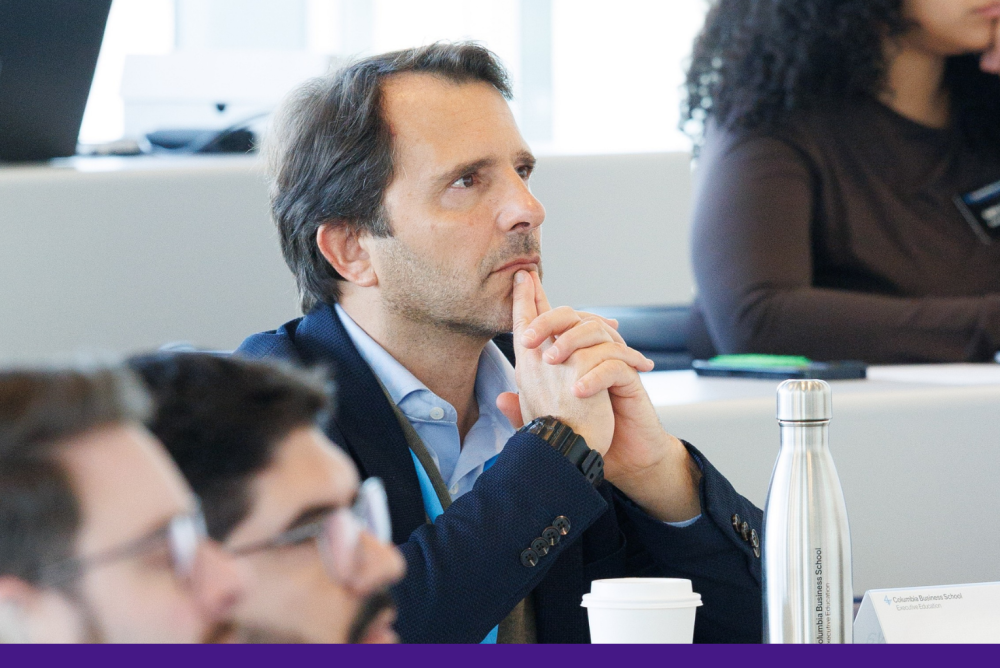
When did governance become central to your work?
That realization came progressively as the business grew in scale and complexity. Over time, I understood that financial results are often the consequence of decisionsc made much earlier and shaped by people, culture, incentives, and governance structures.
At a certain point, you recognize that financial discipline alone is not enough. Sustainable performance depends on the quality of oversight, strategic alignment, and decision-making happening at the board level.
What showed you that financial insight alone was not enough?
In the equipment rental industry, we operate in a highly capital-intensive environment that is deeply influenced by economic cycles. You have to be prepared for very different market conditions and react quickly when the environment changes.
Experiences like that reinforced for me how important governance is as a framework for navigating uncertainty and balancing long-term resilience with operational performance.
What brought you to the Corporate Governance Program?
As CFO, I’m very involved in execution and operational decision-making, working closely with the CEO to connect board strategy with day-to-day business performance.
What I really wanted to understand better was how highly effective boards operate behind the scenes: how they challenge management constructively, maintain independence, and still support the executive team while shaping long-term direction.
What made the program experience different?
Honestly, it happened during the very first morning. The conversations went far beyond technical governance frameworks. There was a strong focus on judgment, leadership, and how boards behave under pressure, which made the discussions feel very real and highly relevant.
The diversity of the participants also elevated the experience. Hearing perspectives from different industries and countries broadened the conversation in ways I hadn’t expected.
What stayed with you most?
I see three major areas of exposure today: technological disruption, geopolitical uncertainty, and organizational culture.
In a world that is becoming faster and more complex, boards need greater diversity and stronger competencies to respond effectively to those risks.
How did the program change your view of boards?
I see three major areas of exposure today: technological disruption, geopolitical uncertainty, and organizational culture.
In a world that is becoming faster and more complex, boards need greater diversity and stronger competencies to respond effectively to those risks.
How has your approach to decision-making evolved?
I see three major areas of exposure today: technological disruption, geopolitical uncertainty, and organizational culture.
In a world that is becoming faster and more complex, boards need greater diversity and stronger competencies to respond effectively to those risks.
Where are boards most exposed today?
I see three major areas of exposure today: technological disruption, geopolitical uncertainty, and organizational culture.
In a world that is becoming faster and more complex, boards need greater diversity and stronger competencies to respond effectively to those risks.
What defines the shift from operator to board-ready leader?
It’s the shift from managing short-term performance to stewarding long-term value, resilience, and accountability.
Upcoming Corporate Governance Program
$10,550
Corporate Governance Program: Developing Exceptional Board Leaders
4 CIBE Credits
Sign Up for Email Alerts
Sign up for program updates and content relevant to today's business leaders from Columbia Business School Executive Education.