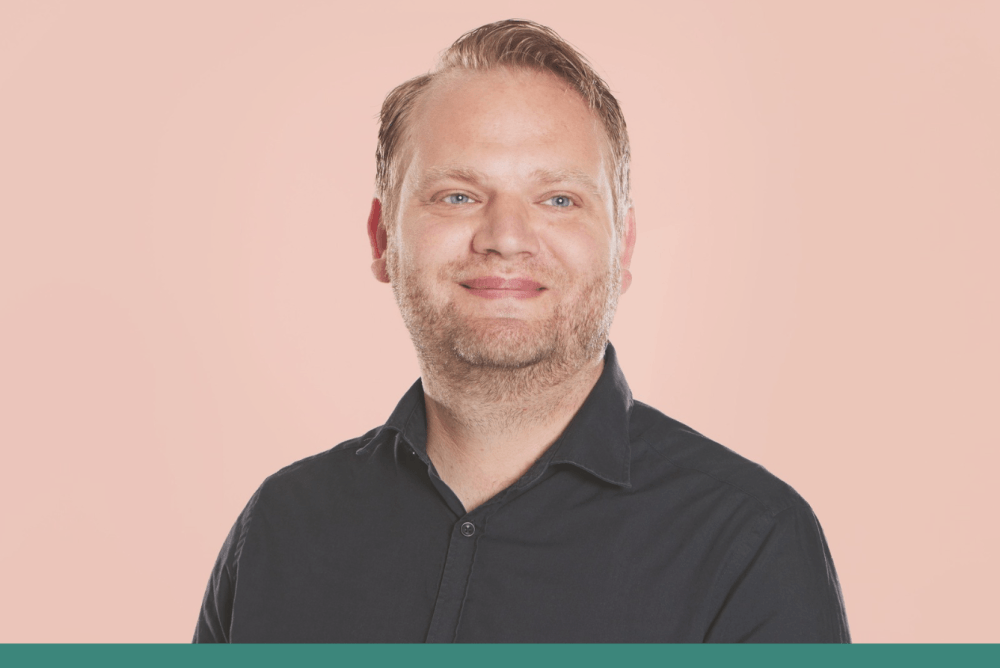
Tim van Mourik on Creating Space for People to Take Ownership
Building Trust, Ownership, and Stronger Teams
For Tim van Mourik, effective leadership means combining trust and support with the challenge to keep growing. Leadership Essentials gave him practical frameworks for putting that balance into practice as his role at Neuf expanded from Head of People & Operations to Director People & Organization.

At Neuf, Tim van Mourik's job is, as he puts it, to make sure people "can do great work and enjoy doing it." As Director of People & Organization, that means connecting people, culture, operations, and strategy at an interim management and consultancy firm specializing in spatial development and working with government organizations to create sustainable living environments.
It is also a role where leadership rarely means watching over someone's shoulder. Many of Neuf's people work inside client organizations, so staying connected requires trust, clarity, and giving people room to take ownership. Van Mourik took Columbia Business School Executive Education’s Leadership Essentials program about seven months after joining Neuf as Head of People & Operations. When he stepped into the director role, roughly 20 months later, he brought the lessons from that experience into a broader, more strategic remit. We asked him what he learned and how the experience has shaped the way he builds trust, develops people, and creates space for greater ownership.
How do you lead when many of your people are working inside client organizations rather than alongside you?
It asks for a lot of trust, clarity, and connection. Our people are often doing their work at client organizations, so leadership is not about checking every detail. It is about staying close, being available, giving direction, and making sure people feel supported.
Leaders within our organization now focus on Secure Base Leadership: offering safety and trust, while also encouraging people to take ownership and grow.
Why did you choose Leadership Essentials so early in your time at Neuf?
I had just started at Neuf and wanted to grow into the role in a conscious way. I was learning the organization, getting to know the people, and thinking a lot about what kind of leader I wanted to be. The program gave me structure, reflection, and new language for things I was already experiencing in practice.
What from Leadership Essentials has had the greatest impact on how you lead?
The sessions that helped me most were the ones that linked personal leadership to everyday behavior. Frameworks around trust, feedback, purpose, and team dynamics were especially useful. They made leadership less abstract and more practical: What do you actually do in a conversation, in a team meeting, or when someone needs support?
Two and a half years later, what has stayed with me is the importance of slowing down before jumping into action. Leadership is often about listening properly, asking better questions, and being clear about expectations. I also still use the idea that good leadership combines warmth with challenge. People need to feel trusted, but they also need to be invited to stretch themselves.
How do Neuf's values influence the way you lead?
Neuf describes its values as plezier, vrijheid and kwaliteit: having fun, freedom, and quality. For me, those three values work best when they are connected. Having fun gives energy, freedom gives ownership, and quality gives direction.
As a leader, I try to create space for people to do things in their own way, while also being clear about the standard we want to deliver. That balance is very Neuf.
How did your leadership development prepare you to step into the Director People & Organization role?
My own development definitely played a part. Over time, I became more aware of my strengths, my patterns, and the impact I have on others. That gave me more confidence, but also more patience. Moving into the director role about 20 months after the program felt like a step that matched the development I had been going through at the time.
My view has also become broader. As Head of People & Operations, I was already working on people, culture, and processes, but that role was also more like being the team leads for all staff functions. As Director of People & Organization, that work is now much more directly connected to the direction of Neuf and to the strategic decisions we make as a company. Culture and people are not separate topics on the side; they are part of how we shape the future of Neuf.
How have you applied what you learned from Leadership Essentials at Neuf?
One thing I've taken from the program is to be more conscious about the space I create in team conversations. I try to slow things down a bit, ask better questions, and make sure people feel comfortable sharing what they really think. At the same time, I try to keep the conversation practical and focused on what we want to improve.
That has helped make discussions more open, but also more useful. It gives people more room to contribute and take ownership.
It has also influenced the way I look at potential and development. I try to look beyond experience alone and pay attention to curiosity, ownership, and the ability to learn. In feedback conversations, I aim to be open, direct, and supportive at the same time. The goal is not just to point out what can be improved, but to help people move forward.
What did you learn from the other leaders in your Leadership Essentials cohort?
I really enjoyed how different the group was. Everyone came from another organization, with different challenges and perspectives, and that made the conversations very rich. It was useful to see that leadership questions are often recognizable across sectors, even when the context is completely different.
How has Leadership Essentials changed the way you develop people and lead your team?
I'm more conscious about the space I create in team conversations. I try to slow things down a bit, ask better questions, and make sure people feel comfortable sharing what they really think. At the same time, I try to keep the conversation practical and focused on what we want to improve.
That has helped make discussions more open, but also more useful. It gives people more room to contribute and take ownership. I also try to look beyond experience alone when I think about potential and development. I pay attention to curiosity, ownership, and the ability to learn. In feedback conversations, I aim to be open, direct, and supportive at the same time. The goal is not just to point out what can improve, but to help people move forward.
What advice would you give to people and organization leaders considering Leadership Essentials?
I would say: go into it with an open mind and make time to reflect properly. The value is not only in the models or sessions, but also in the conversations with yourself and with others. If you work with people and organizations, it gives you practical tools and a fresh perspective that you can use straight away. You can use them straight away.
Upcoming Leadership Essentials Programs
$5,300
Leadership Essentials
2 CIBE Credits
$1,950
Leadership Essentials (Online)
2 CIBE Credits
Sign Up for Email Alerts
Sign up for program updates and content relevant to today's business leaders from Columbia Business School Executive Education.