Vet-repreneur Leadership with Anthony Gitalado
Different leadership skills may be required for different moments in life. Anthony Gitalado wanted to expand his leadership skills as he shifted from his military career to the public sector as a “vet-repreneur.” We sat down with Anthony, who took several different executive education programs a la carte, to get his leadership insights.

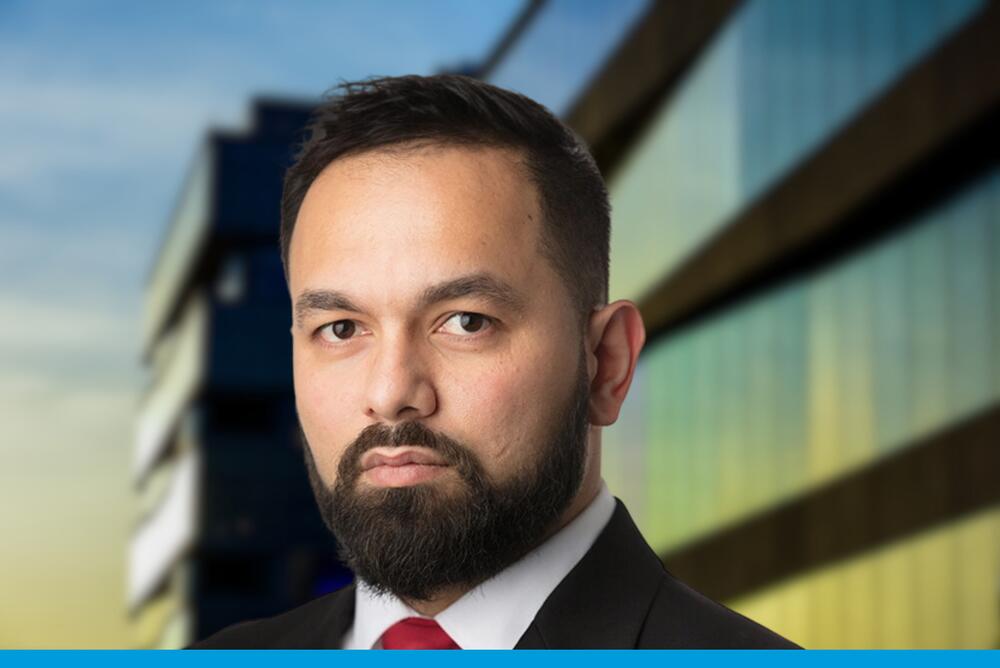
Anthony Gitalado continues to protect his country as a cybersecurity specialist for the Internal Revenue Service. He diligently defends against cyber threats, safeguarding systems by monitoring, detecting, investigating, analyzing, and responding to security events.
Gitalado joined the US Army in 2011 as an infantryman to continue his family’s legacy of serving in the US military. He served with the First Infantry Division, better known as Big Red One, in Fort Riley, Kansas as part of the prestigious 128th Infantry Regiment on black lines.
A self-described “vet-repreneur” – a veteran with an entrepreneurial spirit that runs a business – Gitalado is a lifelong learner that thrives on taking on new challenges. Gitalado wanted to expand his leadership skills as he shifted from his military career to the public sector. He turned to Columbia Business School’s Executive Education military-friendly programs to help enhance his vet-repreneur leadership style by taking several different courses a la carte.
We sat down with Columbia Business School Executive Education alumnus Anthony Gitalado to get his leadership insights.
What inspired you to take Columbia Business School's Executive Education leadership programs?
Columbia Business School is located in New York, the capital of global business. Every time I visit New York it's just contagious – it's that New York state of mind. You feel inspired. You feel driven. Everybody's a hustler. From the guy on the street trying to sell some hot dogs to a guy working on Wall Street trying to sell some stocks. I would never live there, but I think highly of New Yorkers.
The program was brought to me by my veteran mentor. I told him I wanted to continue my education. He had participated and graduated from the Columbia Business School Executive Education program and brought it up to me because I like to think I'm a lifelong learner. When he recommended it, I took a look.
I never thought I'd go back to school again. I'm not a conventional student – got some A’s, a few B's, and a lot of C's. I thought my bachelor's degree in engineering was fine, along with my military experience in addition to my government clearance. But when I met the veteran mentor, he pushed me to do better.
Which classes did you find most impactful?
I've started two small businesses. I like to call it vet-repreneur. It's a mix between veteran and entrepreneur, vet-repreneur. Sadly, I couldn’t trademark the word. I see a lot of people doing venture capitalist programs. But to me, having two small businesses, I prefer having the autonomy and freedom to do what you want to do in your business. I naturally gravitated towards the leadership classes because I am trying to become a better leader. I'm at that mid-level now where I'm ready to jump and become a senior level. So, I decided to take classes a la carte. Out of the eight classes that I took, six dealt with leadership skills.
The one that impacted me the most was the High Impact Leadership class. One of my classmates was serving in US Army Special Forces down in Fort Bragg (now Fort Liberty), North Carolina. We instantly bonded and bounced off leadership styles in class. He was a transitioning veteran whereas I had transitioned not too long ago. We shared our leadership styles with our classmates, which was mostly made of individuals from the private sector. It was impactful to see the leadership styles – good and bad – from the private sector and the public sector.
From my experience in the military, every good leader I had has led from the front and been the example or set the standard of how to be a good leader. In any organization, leadership on top flows down to everybody else and it resonates from there.
What were the key strengths of the program?
I found the program to be very collaborative and put my trust into it. The key strengths were the teamwork from my cohort, the great faculty, and that the students were eager to learn.
This was the first time I ever took the Myers-Briggs test. And I took it more than once! I found out that I was an introvert, which I kind of knew. I never thought I would ever take a Myers-Briggs test for any reason. I learned to craft the way I do things both professionally and personally.
The diverse class makeup and the faculty really opened my eyes. The faculty wasn’t the stereotypical academia types. There were a lot of experts or SMEs in certain fields. I even took a class on how to be a better holistic leader, how to breathe, how to not be overstressed. In another class, a venture capitalist shared a plethora of knowledge of what to do from ground up.
As for my classmates, I am from the public sector and Columbia is the heartbeat of the private sector. Most of my classmates were from the private sector. I learned that their set of complex challenges isn't unique to the private sector; it’s also in the public sector too. In the US, I firmly believe in a public-private sector partnership to solve our economic and national security problems. We're all working as one.
I wish the program was longer. Once you see how much the programs help you out, you don’t want the learning to end.
What was the one thing that stood out most for you in the program?
To be transparent, being considered a graduate of CBS. I never thought I would do it. I'm not your traditional straight-A student, never was. When I was an undergraduate, I never got A's but my professors gave me the hard projects. They sent me out to do research at other institutions because they knew I was a better project person than a traditional test person.
This paid off in the program. A lot of the hands-on projects that we did have, I was better at doing them; working with my classmates versus just taking a test and, "Here you go, pass or fail." Columbia gave us real life, complex contemporary problems to work on like AI. Columbia is around the corner from these actual companies. Since you are in the heartbeat of the global market, New York City, you get the latest and most up-to-date information and bring it directly to us. That’s something that’s unique to Columbia.
How do you think this program will make a difference in your career or life now that you've completed it?
This program gave me confidence. When I did take the classes, they were rigorous, they were fast-paced, nonstop. We, my classmates and I, would text each other on Slack or WhatsApp. Knowing that the challenges you have isn't unique, everybody's going through the same thing, and to take that personal courage to be a lifelong learner is what has changed my outlook.
How do you think the program will make a difference in your organization?
It’s made a difference in two simple ways. To be more patient and to be more risk-adverse. Everybody has a bright idea as how we could change something and be a disruptor, be a change agent. But how do you get the buy-in from the stakeholders and make it work both top-down and down-up. This program taught me how to do that. From now on when I have a great idea I reach out to stakeholders and say, "Help me help you. This is what we have as a goal as an agency, and this is how we can better align to it." Instead of going straight to your manager or coworker and trying to get different buy-ins. This gave me the whole view of how to be more risk-adverse.
How would you describe this program to a fellow veteran who might be interested in taking it?
I actually have had a lot of reflection since I finished the program. To me, it's the best kept secret. It's the best of both worlds. We know that CBS is in the M7 and also an Ivy League school. And instead of putting yourself through the rigorous gauntlet of an MBA at CBS, you could find another way or fast track around it.
I’m not saying that it's lesser. It’s simply because our life is so hectic and busy. I have a family, I have a wife, two dogs, and two young kids. There's no way I could have done an MBA at CBS. And I'd have to have lived in New York. This program was very intuitive and student friendly. You get the best of both worlds when you have a busy lifestyle. And to me, this is a hidden secret.
For a fellow veteran, I would say, “push yourself.” When you serve in the military, you push yourself one way or another. I think a lot of veterans, when they do transition out, they no longer have that mindset. Don't be part of the status quo, push the status quo. Always push yourself, whether it be in service or out of service. Push yourself. Always push yourself.
As a veteran, what unexpected benefits or surprises did you find from Columbia?
This one means a lot to me. I struggled in high school. I bounced around between four high schools in three years. I wasn't the best student. I barely made it to college, barely made good grades, joined the military, came out. I never strived to join an Ivy League school at all. It did not even cross my mind.
There may be a little bit of imposter syndrome, but the unexpected surprise that I did receive from Columbia was that, upon completion of the Certificate of Business Excellence, you're considered a CBS alumni and given an alumni email address. I love my email address. It hit me when I logged on and saw people I see on TV on there, I just never thought I could be part of this community. And I know it’s big.
The person who fought for this was Alberto Cruz. I’m so appreciative that he did. When people say veterans, it’s more than that. It's a whole ecosystem. You have the family, caretakers, advocates, the staff at Columbia, and someone like Alberto. It's just not us. You get that ecosystem at Columbia.
Upcoming High Impact Leadership Program
$12,600
High Impact Leadership
5 CIBE Credits
Sign Up for Email Alerts
Sign up for program updates and content relevant to today's business leaders from Columbia Business School Executive Education.