Influence and Reach Beyond the Military with Luis Armendaris
As a global business strategist and Chief Strategy Officer, veteran Luis Armendaris knows how to lead diverse teams to success. Believing all modern executives need to be well-rounded, Luis wanted to improve his marketing skills. We sat down with Luis to get his insights into extending his influence and reach beyond the military with Columbia Business School Executive Education’s Chief Marketing Officer program.

Luis Armendaris is a global business strategist with a remarkable track record of growing companies and teams. He is the Founder of Gordon Lewis Group and serves as the Chief Strategy Officer at Vtech Dealer IT. As a veteran who served as a Personnelist specializing in human resource management, Armendaris was stationed in Europe and served for eight years in the U.S. Air Force. Upon leaving the military, he relocated to South America, delved into small startups, and managed various businesses. A former Air Force colleague invited him to join Vtech Dealer IT (formerly Viamontech) in 2015. Today, he is one of the managing partners.
As a Chief Strategy Officer, Armendaris knows how to lead diverse teams to success, and believes that all modern executives need to be well-rounded. In order to reach new heights and achieve even greater success, there was one skill set he wanted to bolster – his marketing abilities. Armendaris enrolled in military-friendly Columbia Business School’s Executive Education Chief Marketing Officer program to extend his reach and influence.
To get some insights into extending your reach and influence, we sat down with Chief Marketing Officer program alumnus Luis Armendaris.
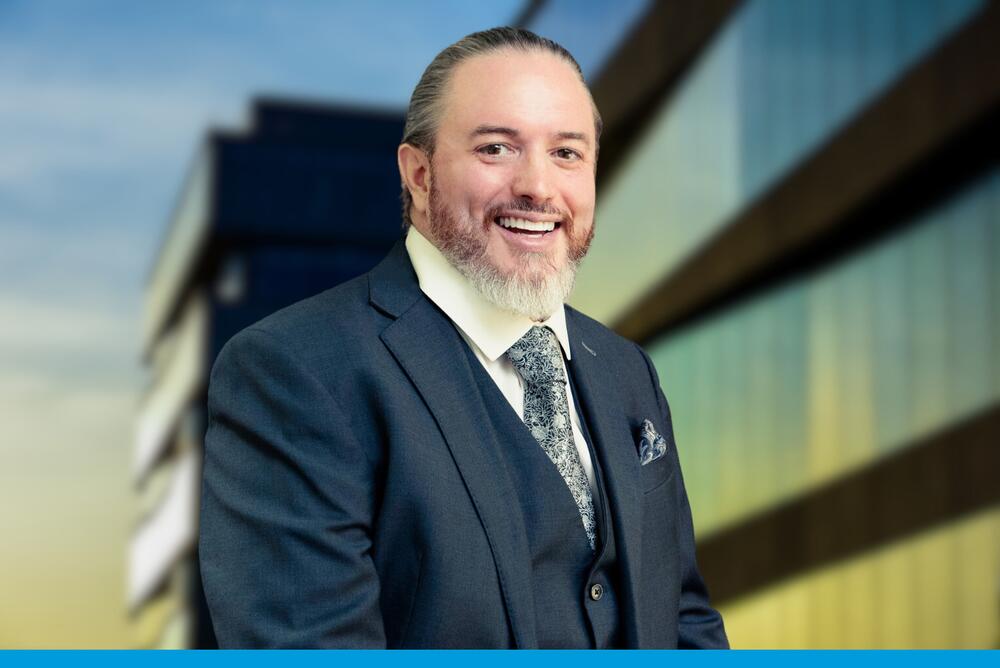
With all the programs available, how did you decide on Columbia Business School’s Chief Marketing Officer Program?
Obviously, the reputation of the school. It's an Ivy League school, after all. I have lived in various places over the years, growing up in South America and serving around the world in the military has given me a global perspective, but my early years in New York have instilled in me a lasting connection with the city.
I have always been an autodidact, and I never considered formal education a very useful investment of my time as an entrepreneur, but my perspective shifted in my late 30s, and Columbia presented the perfect opportunity to scratch that new itch. The prestige of the university, the chance to return to New York, the networking opportunities, and the pride it would bring to my parents, who had immigrated to the U.S. and lived for many years in the city, were all factors.
As a veteran, I was impressed by Columbia Business School’s openness and support. I wanted to make the most of the remaining funds towards the end of my GI Bill benefits. Columbia was highly responsive and accommodating. I don't think I did anything other than exchange a couple of emails, and the VA reps took care of it. They made the process super simple and easy. I was looking for a prestigious school and a strong program; my benefits were expiring soon, and I didn’t have time to waste. Columbia Business School’s Chief Marketing Officer program aligned perfectly with my needs. I was looking to improve on my weaknesses, and this program was a great opportunity to do that, so I went for it.
What was surprising about the program?
The electives. They were enticing; choosing subjects outside the core program was a very cool bonus. I took a course in macroeconomics and a behavioral science class that has stuck with me, it’s probably the best class I have ever taken. It was amazing. All the classes were fun, dynamic, and useful.
Then, the flexibility of the program was a crucial factor for me, particularly because it was offered in a hybrid format. If that option had not been available, I would not have considered enrolling. Meeting some of the professors and my classmates in person was something I recognized as important; the learning experience is significantly enriched when it occurs face-to-face. Additionally, the opportunity to select certain electives, participate in various programs, and engage in networking on campus proved to be invaluable.
Finally, I was pleasantly surprised to encounter other veterans. Given the older age demographic in executive programs, it isn’t immediately apparent that some of us have served in the military. Seeing many fellow veterans taking advantage of their hard-earned benefits was great.
Did you have any expectations before you took the program and were they met?
I'm lucky. I've been on an educational journey, taking classes and doing personal and professional development courses for years. Many people have reservations about this type of course, fearing they’ll be as demanding as their memories of traditional school or as tedious as some lower-level MBA classes. These executive education courses are not that. You get what you put into them. They offer flexibility – you can invest as little as eight hours a week or dive deep with up to 30 hours if you have the time. It’s natural to feel unsure, especially when juggling work and other commitments.
My concerns about the program’s schedule were alleviated by its flexibility—much of the coursework you can do on your own time, which worked well for me. The bite-sized video lessons, ranging from four to 12 minutes each, hold one’s attention, making learning manageable and enjoyable. The classes weren’t in a typical semester-long fashion. They ran six to eight weeks, with one being 12 weeks. You get a sense of accomplishment as you move along. You can pull off learning these new things while still working at your normal job. Even my initial concerns about online classes were eased by the chance to connect with classmates during on-campus sessions. There’s a lot of work, but if you manage your time well, it works out and the experience is great.
Can you describe the instructors and what key insights they gave into the marketing industry?
The professors' quality and real-world experience were a standout aspect of this program. Many instructors had strong ties to the marketing industry and contributed valuable insights. Digital marketing changes constantly, so it’s very hard even to have material to teach because it changes quickly. The fact that there was someone there who could address those questions in the live classes was a game changer. They’re not presenting the stale old classes from two years ago. They offered up-to-date content and simulations that were super fun and engaging.
Oded Netzer, who taught one of my core courses, always offered great lessons and food for thought. Steve Martin, boasting what has to be one of the coolest names around, taught my Behavioral Sciences class and really made a lasting impression on me. So did Stephan Meier. The instructors were knowledgeable and engaging. You’re hearing directly from the people who actually do the research. It makes a difference. This direct access to leading experts enriched my understanding of people’s behavior, and my newfound perspective has influenced my decision-making since.
What did you learn from your executive education peers?
As this was a CMO program, there were obviously a lot of marketing people, which I am not. But there were also people in theater, medical institutions, and other industries. Even though some discussions were unrelated to my field, they were genuinely fascinating, including somebody in show business on Broadway managing marketing strategies and somebody living in India trying to deal with medical industry pricing issues. The broadness of the student base was outstanding and provided diverse perspectives.
When I was on campus, there were even more opportunities to interact with my peers. I went in search of the best ice cream in New York with a Data Scientist from Saudi Arabia. I went to dinner with a classmate who worked in the oil and gas industry one day and had lunch with somebody who worked in the medical industry the next day. My peers were eclectic, diverse, and fun. I gained a lot of insights from them.
How would you describe the Chief Marketing Officer Program to a fellow veteran?
This program is up-to-date. It’s not just a bunch of tired theories that you can't apply to what you do. It's practical. There are very fun simulations that are part of the course. The electives are great. They help you polish up on other skills where you may be lacking. Best of all, you join a community where you can return and continue honing your skills.
How do you think this program will make a difference in your career or life?
It already has! I have decided that I'm either going to buy or start a digital marketing company to bring it into our corporate group. I'm going to start small. Gaining the skills and knowledge and observing my fellow classmates has lessened that fear of starting something new. This program has given me the push I needed.
By the end of the year, I anticipate launching a small venture with one or two employees and diving into the world of digital marketing.
Thanks to this program, I’ve become more knowledgeable about marketing and can provide opinions and insights that I lacked before. This includes everything from messaging, branding, internal dynamics, and people management. The program's impact has gone beyond my day-to-day and shaped my medium and long-term vision.
Any additional thoughts you’d like to share?
I think leadership, followership, and mentorship are very important for veterans. I wouldn't be here as a professional if I didn't have two or three of my sergeants and supervisors “hit me upside the head” and tell me to remember to use my GI Bill, and, at the time, pay for the “GI Bill Kicker”. When you're an airman or a private, you are broke. At that time, I didn’t see the importance of it, but I trusted my superiors. Twenty years later, I’m grateful to those superiors. I see the great importance of their words.
I feel compelled to call on politicians to safeguard and continually update the GI Bill benefits, ensuring it keeps pace with the rising costs of quality education. My message to all Airmen, Sailors, Soldiers, and Marines, is to make the most of this opportunity upon their discharge. The GI Bill is an invaluable asset; it enriches your network, bolsters your career, and enhances your general knowledge, it’s a bridge to a better life. I cannot stress enough its significance and worth. Finally, and as always, thank you for your service.
Upcoming Chief Marketing Officer Program
$22,000
Chief Marketing Officer Program: Marketing Leadership in the Age of AI
18 CIBE Credits
Sign Up for Email Alerts
Sign up for program updates and content relevant to today's business leaders from Columbia Business School Executive Education.